How do I know if my sewer line is broken?
Look for several slow drains at once, gurgling toilets, sewer smells and soggy spots in the yard. These point to the main line. A camera inspection from a local provider can confirm what is wrong.
Request an estimate today
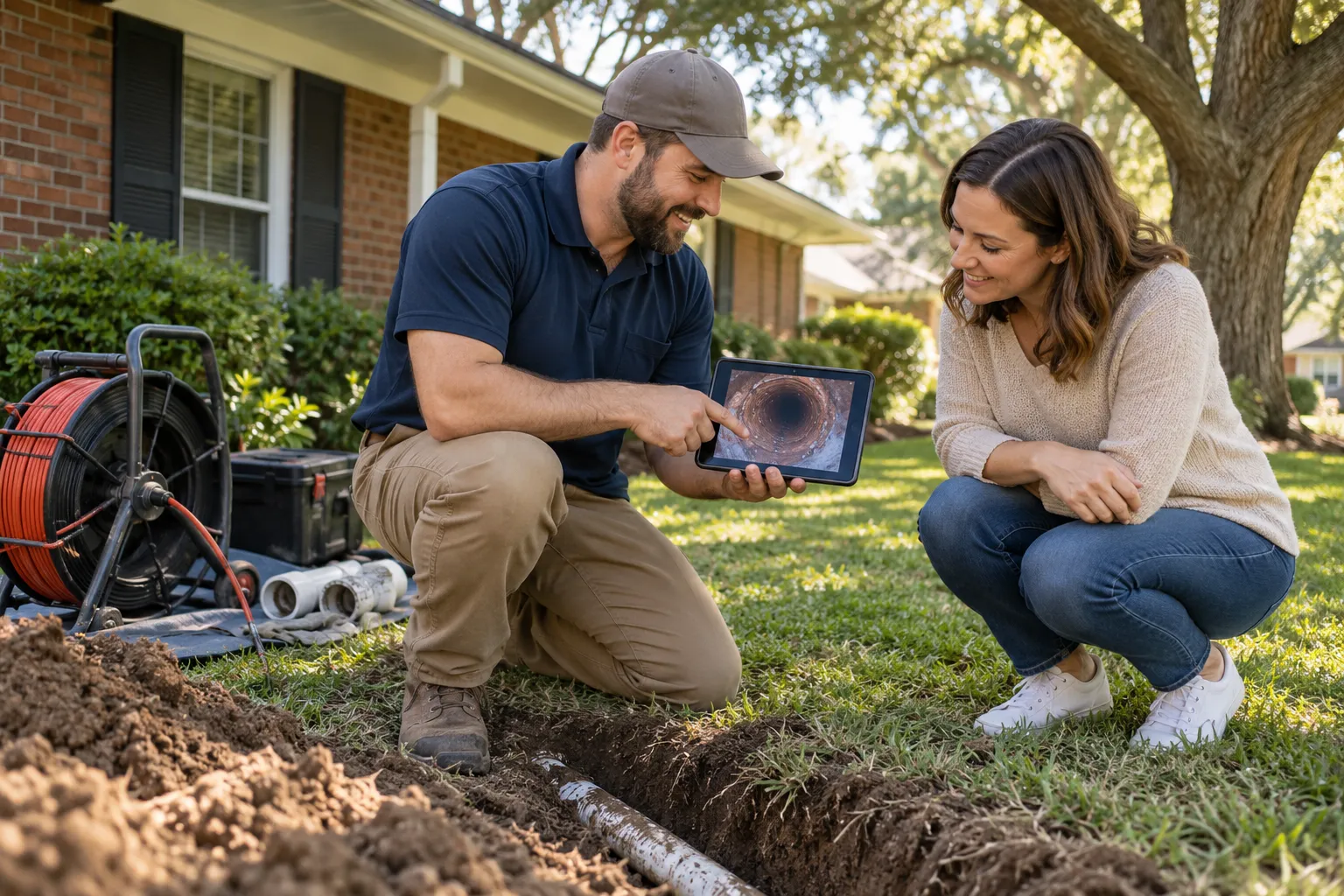
Say you flush a toilet and hear gurgling from the shower drain. Then a damp patch shows up in the yard. These are classic signs of a sewer line in trouble, and they tend to get worse, not better.
Singingsuck Plumbing is a referral service. We connect homeowners in the San Antonio area with independent providers in our network who handle sewer line repair, blocked pipe services and camera inspections. The provider does the work, not Singingsuck Plumbing. Older houses get extra care here, because aging pipes and past patches hide surprises. Request an estimate, and a local provider can walk you through the next step. Ask about the repair method, the written scope and any permits before work starts.
Say you come home and find dirty water pooling around a floor drain. Your first job is to keep everyone safe. Sewage carries germs, so treat it with care.
If sewage is rising, ask a provider about emergency visits. Many providers can respond quickly, but availability varies. Request a callback to check who is open near you.
Say you notice every drain in the house is slow, not just one. That points to the main line, not a single sink.
Look past the leak. A wet yard can mean the pipe is broken below ground.
Say a house was built decades ago. The pipe under the yard may be clay, cast iron or a fiber material that is no longer common. These wear out.
Clay joints can slip apart. Cast iron rusts from the inside and flakes. Fiber pipe can soften and collapse.
Older house, slower look. A past patch may sit next to weak pipe. A provider may find a belly, which is a low spot where waste settles. They may also find a connection nobody knew about.
Say a large tree sits near the pipe. Roots follow moisture and slip into tiny cracks. Over time they can fill the line.
Many homes here sit on a slab. That means the line may run under the floor, which makes problems harder to spot.
Say a provider shows up and does not start digging. Good. A careful provider looks first.
A small camera goes into the line. It shows cracks, roots, bellies and breaks on a screen. Ask to see the video.
A locator tool finds where the pipe runs and how deep. That helps the provider limit digging to what is needed.
Not every break needs a trench. The right fix depends on the pipe, the damage and the yard.
If only one section is bad, a provider can dig down and replace just that piece.
A resin liner goes inside the old pipe and hardens. It can work when the pipe is cracked but still in shape. It may not suit a collapsed line.
A new pipe pulls through as the old one breaks apart. It limits digging in some cases.
When the line is badly worn, open trench replacement may be the sound choice. Ask the provider why they picked their method.
A quick patch can save money today and cost more later. Doing the job right keeps the foundation, floors and yard safe. It also helps at resale. Buyers and inspectors often scope the sewer line. A clear record of work gets noticed.
Keep the camera video, the written scope and any receipts.
Say the broken pipe is near the street. Who owns that part? It depends on your area. Often the homeowner owns the line up to the main, but rules differ.
Some policies may cover sudden damage. Many do not cover wear and tear. Check your policy. Providers can often help document damage for a claim.
Say you have two estimates that look very different. Compare the details, not just the total.
Get it in writing.
Request an estimate, and Singingsuck Plumbing will refer you to an independent provider in our network. There is no obligation to hire.
A small camera checks the line so you see the real damage before any digging starts.
A provider can replace one cracked or broken section when the rest of the pipe is sound.
A resin liner can seal cracks inside an old pipe and reduce the amount of digging.
Badly worn or collapsed lines may need new pipe from the house to the connection point.
Costs depend on pipe depth, length, material, yard access and local permits. These are typical U.S. ranges only. Get a written quote that spells out the method and what is included.
| Item | Typical range | Notes |
|---|---|---|
| Camera inspection | $100 – $500 | Often more if a locate is needed |
| Spot repair | $1,000 – $4,000 | Depends on depth and access |
| Pipe lining | $3,000 – $12,000 | Priced by length and pipe size |
| Pipe bursting | $4,000 – $15,000 | May cut down on digging |
| Full trench replacement | $3,000 – $25,000 | Longer lines and slabs cost more |
| Permits and inspection | $50 – $500 | Varies by local rules |
Tell us what you see, like backups, smells or wet spots, and where your home sits.
Singingsuck Plumbing refers you to an independent provider in the San Antonio area.
The provider inspects the line and explains the repair options and price.
Choose what fits, get it in writing, and the provider does the work.
A wet yard is only a clue. A careful provider finds the real source.
Providers in our network know that aging pipe and old patches can hide surprises.
A proper repair keeps the foundation, yard and resale record in good shape.
Ask for scope and price in writing so you can compare options with confidence.
Send a request for an estimate and tell us what is going on. A local provider in our network can follow up. Prefer the phone? Request a callback to check provider availability.
No obligationLook for several slow drains at once, gurgling toilets, sewer smells and soggy spots in the yard. These point to the main line. A camera inspection from a local provider can confirm what is wrong.
Typical U.S. costs run from a few hundred dollars for an inspection to many thousands for full replacement. Depth, length and access change the price. Always get a written quote before work starts.
Some policies may cover sudden damage, but many exclude wear and tear or root damage. Check your policy and ask your insurer. Providers can often help document damage for a claim.
Send a request for an estimate and tell us what is going on. A local provider in our network can follow up. Prefer the phone? Request a callback to check provider availability.
No obligation